Qwen: Qwen3.8-Max 是拥有 2.4 万亿参数的 MoE 旗舰模型,在编程和专业工作领域实现了全面飞跃。它能自主编码并交付跨越 10 天以上的完整项目,处理法律、金融、设计及其他专业领域的数百项专门任务,在单次对话中端到端地生成生产级成果。原生视觉理解贯穿规划、执行和验证的全周期,支持对超长文档和扩展视频内容进行深度语义分析。在长时程任务中,它能自主规划、通过闭环反馈进行迭代并持续进化。
返回模型列表 42.5%$2/ 百万 token$6/ 百万 token读取:0.17-0.25/ 百万 token写入:2.5/ 百万 token1M5.26s26.4tps
 Qwen: Qwen-Audio-3.1-ASR-FlashQwen: Qwen3.8-Omni-FlashQwen: Qwen3.8-Max-0902
供应商
在多个供应商之间路由请求。复制供应商标识以设置偏好供应商。
供应商缓存命中率上下文
Alibaba Cloud
alibaba
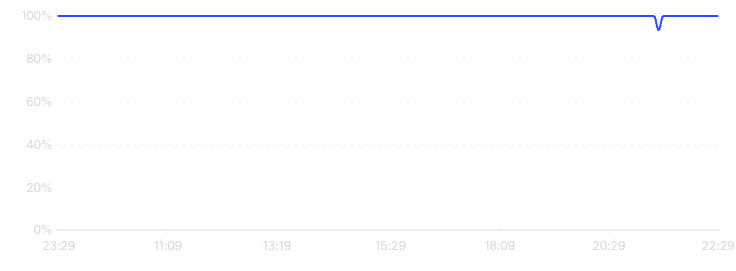
可用率
24 小时AI Gateway 直连请求及各供应商的成功率。
Oct 26, 19:59
Alibaba Cloud100.00%
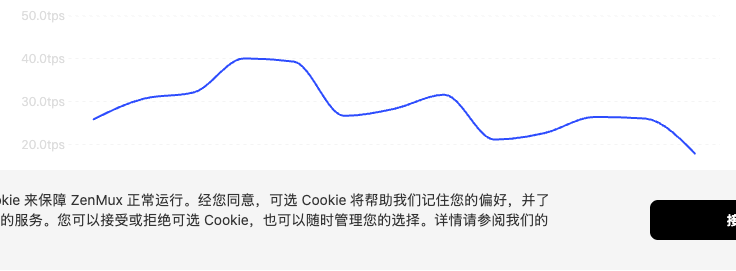
吞吐量
24 小时AI Gateway 实时流量的 P50 吞吐量,单位为每秒 token 数(TPS)。
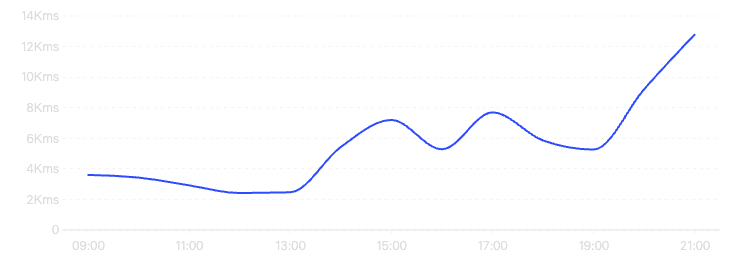
延迟
24 小时AI Gateway 实时流量的 P50 首 token 延迟(TTFT),单位为毫秒。
Oct 26, 19:00
Alibaba Cloud5.26s
活动
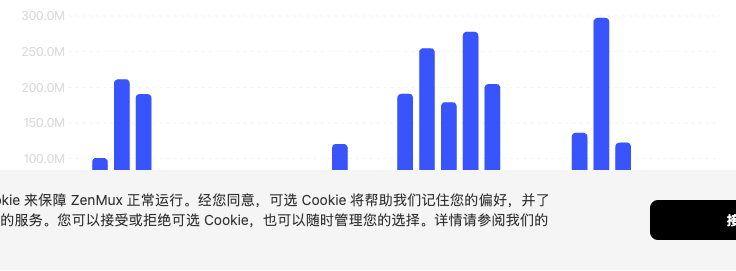
该模型随时间变化的 token 用量和请求流量。
Token 消耗
Oct 25
Alibaba Cloud427.3K
按实际处理请求的供应商拆分 token 用量。区块越大,表示该供应商处理的模型流量越多。
 Artificial Analysis


Apps
Public apps that send the most traffic to this model. Good signal for what real production workloads look like — and a hint at which use cases this model is best suited for. View All
Token 排行
No app usage is available for this period.
相关模型
更多模型来自 Qwen
Qwen: Qwen-Audio-3.1-ASR-Flash1.25Mtoken
Qwen-Audio-3.1-ASR-Flash 是一款支持高效短语音识别的大规模模型,专为高质量、多语言及文化内容转写场景设计。该模型支持多语言及多地区方言识别,并针对中国古诗词的韵律、节奏及文言文表达优化了。它有上下文增强、标点预测及文本归一化功能。此版本还支持多方言的可控 ASR/AST 输出,并有原生转写与润色功能,以及工业级的多人对话角色转写能力。
Qwen: Qwen3.8-Omni-Flash1.26Btoken
专为音频和视频理解及内容分析而设计,支持文本、图像、音频和视频输入,并输出文本。Qwen: Qwen3.8-Omni-Flash
Qwen: Qwen3.8-Max-090224.82Btoken
Qwen3.8-Max-0902 是 Qwen3.8-Max 的快照版本,有更强的编码性能,适用于复杂的工程任务和长程自主开发。它同时提升了智能体工具使用能力以及针对图表推理、文档解析和多模态感知的视觉理解能力,并保留了 100 万 token 的上下文窗口、推理模式以及完整的工具生态系统。
FAQs
What is Qwen3.8-Max?
Qwen3.8-Max is Alibaba Qwen’s flagship AI model for coding, professional work, research, multimodal understanding, and long-horizon agentic tasks. Released on August 3, 2026, it is built on a 2.4-trillion-parameter sparse mixture-of-experts architecture, with approximately 95 billion parameters activated during inference.
Compared with earlier models in the Qwen family, Qwen3.8-Max is designed to handle longer and more complex workflows. It can plan tasks, use tools, respond to environment feedback, and refine its work across multiple iterations.
On 开桥, developers can access the Qwen3.8-Max model using the model ID qwen/qwen3.8-max.
What can Qwen3.8-Max be used for?
Qwen3.8-Max can support software engineering, research, data analysis, document processing, web development, business automation, and other professional workflows.
Common applications include:
- Generating, reviewing, and debugging source code
- Working with large repositories and long documents
- Building frontend and backend prototypes
- Assisting with the analysis and organization of financial, legal, logistics, and business documents
- Understanding images, screenshots, interfaces, and video
- Running tool-assisted research and automation workflows
- Producing structured output for APIs and software systems
Its agentic capabilities make it particularly useful for tasks that require planning, execution, inspection, and repeated refinement rather than a single chatbot response.
Does Qwen3.8-Max support a 1M-token context window?
Yes. On 开桥, Qwen3.8-Max supports a context window of up to 1 million tokens on the current Alibaba Cloud route.
This large context window makes the model suitable for working with extensive source code, research papers, business documents, long conversations, and extended video content. The usable input length depends on the requested output length, reasoning settings, API parameters, and the selected 开桥 route. A larger context window does not guarantee perfect recall across every token, so developers should evaluate long-context accuracy using representative production data.
Is Qwen3.8-Max multimodal?
Yes. Qwen3.8-Max accepts text, image, and video input and produces text output.
Its multimodal capabilities can be used to inspect screenshots, interfaces, charts, documents, images, animations, and video as part of a broader reasoning or agentic workflow. For example, the model can analyze a user interface, interpret visual information, generate related source code, and review the resulting output.
The exact input formats, file limits, and supported features may depend on the API configuration and selected route. Developers should check the live 开桥 model page and API documentation before implementing a multimodal production workflow.
Does Qwen3.8-Max support tool use and AI agents?
Yes. Qwen3.8-Max supports function calling, structured outputs, context caching, and tool-assisted workflows.
The model can create a plan, call approved tools, process the returned information, respond to failures, and continue iterating toward a defined goal. These capabilities make it suitable for coding agents, research agents, productivity automation, document analysis, and other multi-step applications.
Developers can connect the model to their own APIs, databases, search systems, MCP services, and internal tools. Tool access must be explicitly configured and controlled by the application; the model does not receive unrestricted access to external systems by default.
How much does Qwen3.8-Max cost on 开桥?
开桥 lists the following standard rates for Qwen3.8-Max:
- Input: $2 per 1 million tokens
- Output: $6 per 1 million tokens
- Explicit cache read: $0.17 per 1 million tokens
- Implicit cache read: $0.25 per 1 million tokens
- Cache write: $2.50 per 1 million tokens
During the current 30% 开桥 promotion, the listed rates are:
- Input: $1.40 per 1 million tokens
- Output: $4.20 per 1 million tokens
- Explicit cache read: $0.119 per 1 million tokens
- Implicit cache read: $0.175 per 1 million tokens
- Cache write: $1.75 per 1 million tokens
Pricing and promotions may change. Developers should check the live 开桥 Qwen3.8-Max page for current rates before estimating a production budget. Actual costs depend on input and output volume, reasoning length, cache type and usage, and application behavior.
Is Qwen3.8-Max free to use on 开桥?
Qwen3.8-Max is available on 开桥 through pay-as-you-go access and eligible promotions rather than as a permanently free model. There is no separate model edition called “Qwen3.8-Max Free.”
Any free credits, promotional access, subscription benefits, or reduced rates are subject to the conditions shown on the current 开桥 pricing and model pages.
For production applications, teams should also consider token volume, cache usage, context length, concurrency, and expected output length when estimating the total cost.
Is Qwen3.8-Max open source or available as open weights?
Qwen has released Qwen3.8-2.4T-A95B as an open-weight Max-class model in the Qwen3.8 family. It is closely related to the hosted Qwen3.8-Max offering, but the downloadable checkpoint and hosted service should not be assumed to be feature-identical.
The hosted Qwen3.8-Max model adds capabilities such as multimodal input, non-thinking mode, official built-in tools, and a default 1M-token context window.
For teams that prefer managed access, 开桥 removes the need to host the model, manage large-scale GPU infrastructure, or maintain a separate inference deployment. Developers can instead access Qwen3.8-Max through the 开桥 unified API.
How can developers access Qwen3.8-Max through 开桥?
Developers can access Qwen3.8-Max through the 开桥 unified API using the model ID qwen/qwen3.8-max and a 开桥 API key.
开桥 provides route-level visibility into token pricing, cache rates, context length, latency, throughput, uptime, and availability. This helps teams evaluate operational performance and cost before moving an application into production.
Qwen3.8-Max can be connected to compatible applications, coding tools, agent frameworks, and backend workflows. Its support for function calling and structured outputs also enables integration with custom APIs and automation systems.
Before production deployment, teams should evaluate response accuracy, latency, cache behavior, tool-call reliability, token cost, and route availability using workloads representative of their application.